




A small furniture importer once received a sea freight shipping quote that seemed to be extremely good. The base rate was very low. She immediately booked the shipment. Then the final invoice arrived. Her cost had nearly doubled due to terminal fees, fuel and destination cost.
Sea freight shipping costs are made up of the base ocean rate plus additional charges such as terminal handling, fuel surcharges, customs fees, and inland transport which is why a quote's final invoice can run 20–50% higher than its headline price
This happens more frequently than most shippers are aware. The lowest price on a quote is not necessarily the lowest final price. This guide will explain exactly what is driving sea freight shipping prices. You will be aware of the kinds of fees that get missed. You will also be able to compare offers the right way so that you will not be surprised.
When Does Sea Freight Make Sense for Your Shipment?
Sea freight means transporting goods by sea on cargo ships. Cargo travels in standardized steel containers that are loaded onto vessels and moved from port to port.
There are two main ways to book space:
- FCL (Full Container Load): You only hire a container for your cargo.
- LCL (Less than Container Load): Your shipment is shipped on a container with goods from other shippers.
Around 80% of the volume of international trade in goods is carried by sea, according to UNCTAD's Review of Maritime Transport. Because ships carry far larger volumes per trip than aircraft, the cost per unit drops significantly compared to air freight.
Sea container transport is best suited for large quantities. It is also suitable if you are flexible with your delivery date. For light or urgent or goods that require delivery within a few days, air freight is a better option. Air is expensive, but travels faster.
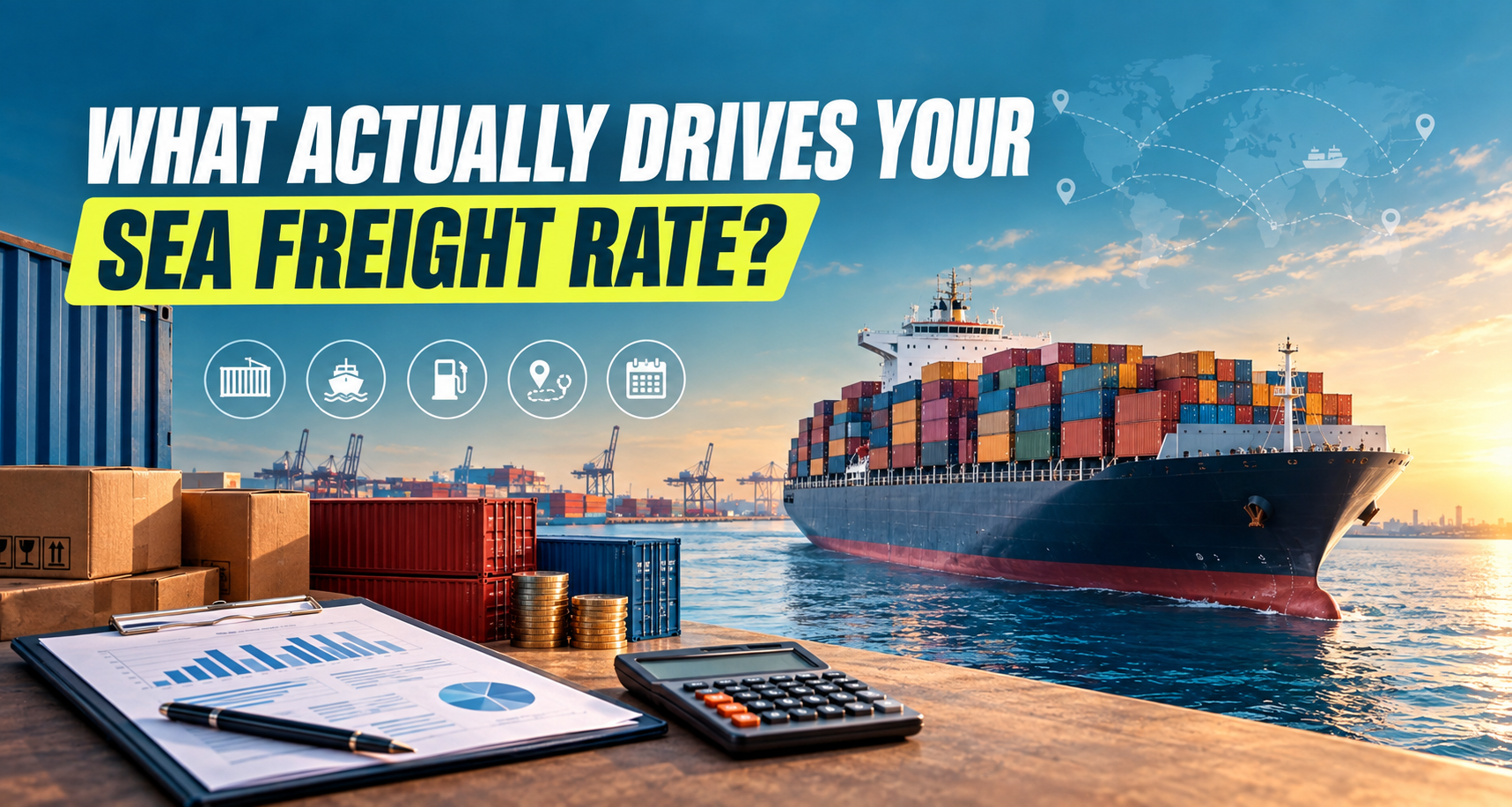
What Actually Drives Your Sea Freight Rate?
The final price is determined by several factors. Once you understand them, you'll notice that two estimates for the same route could be vastly different.
Key cost drivers include:
- Cargo weight and volume
- Container size (20-foot, 40-foot, or 40-foot high cube)
- Whether you choose FCL or LCL
- Origin and destination
- Shipping route and current demand
- Fuel prices
- Season and carrier capacity
- Cargo type, including dangerous goods
- Customs requirements
- Inland trucking or rail before and after ocean leg.
- Transit time and service level
There is no single sea freight cost per kg you can rely on. Prices shift often. They are subject to route, season, availability of ship space and market conditions. A carrier that quotes one lane in January can charge differently for that same lane in June.
Let's take a simple example. In the same week, 2 companies send the same 40' shipping containers from Hong Kong to LA. One company has booked three weeks ahead during the tranquil period. Another company has booked at the last minute during peak seasons. Ships are full. Demand is high. The second shipment can easily be much more expensive, even with the same cargo and container size.
During peak season, the same lane can see rates jump by 30–50% week over week
Understanding how to calculate freight cost per unit also helps. Simply divide the shipping cost by the quantity of units you have in your shipment. This simplifies the fair comparison of container sizes and shipping methods.
FCL vs. LCL: Which Saves You More Money?
FCL is the most cost effective mode of transport when the amount of goods is sufficient to fill or close to filling a container. LCL is suitable for smaller consignments that do not require a full container.
| Factor | FCL | LCL |
|---|---|---|
| Best for | Larger shipments | Smaller shipments |
| Container | Dedicated | Shared |
| Handling | Usually less | Usually more |
| Cost | Can be better at higher volumes | Useful for smaller volumes |
| Transit | Often more predictable | May involve consolidation |
LCL doesn't always cost less just because your shipment is small. They all are consolidated with other goods in the origin warehouse. They get separated again at the destination. Both these increase handling charges and time.
The volume at which FCL becomes more cost effective and is subject to change often. It depends on the trade lane, the carrier, season and market rates.
There is no fixed number that can be applied to all shipments. Some routes see the breakeven around 12–15 CBM, but this shifts with freight rates, so treat any fixed number you see online with caution and confirm current thresholds with your forwarder.
A freight forwarder can run the figures for your particular route.
For LCL shipments, cost is based on chargeable weight — the greater of actual weight or volumetric weight.
In sea freight, 1 CBM is treated as 1,000 kg. So a shipment measuring 1.2m × 1.0m × 1.5m (1.8 CBM) with an actual weight of 950 kg would be charged on 1.8 CBM, since that's the higher figure.
This 1,000 kg per CBM convention is the industry standard for ocean freight, though individual carriers may round dimensions differently, so it's worth confirming with your forwarder.
Optimizing packaging to reduce CBM, not just actual weight is one of the fastest ways to cut LCL costs.
FCL or LCL is simply about aligning your sea freight shipment plan with the volume of cargo. Don't simply choose the easiest option that sounds simpler.
Choosing correctly between FCL and LCL is one of the simplest ways to control your sea freight shipping budget
How Cargo Type and Characteristics Affect Your Sea Freight Rate?
Ocean shipping does not use the same freight class system, unlike the U.S. domestic truck freight class system. Instead, ocean carriers and forwarders look at your cargo's actual characteristics to set a price.
Factors that can affect your rate include:
- Weight and volume
- Density, or how heavy your cargo is compared to its size
- Dimensions, especially for oversized or awkward shapes
- The commodity itself
- Packaging type
- Whether the cargo counts as dangerous goods
- Temperature control needs, such as refrigerated containers
- Special handling requirements
- Insurance coverage you choose to add
Heavy and compact cargo can travel more efficiently than a bulky or light load. Ships and containers have both weight and space limits. Before you request a quote, Be sure to know the precise dimensions and weight of your cargo. This will save you last minute changes.
How Origin, Destination and Port Fees Change Your Total Cost?
Where your cargo starts and ends its journey has a big effect on international sea freight pricing. Ports charge fees upon loading, unloading of containers and handling fees. The costs of sea freight may differ significantly between different ports on the same route.
Common costs associated with a location include:
- Origin handling and documentation
- Terminal handling at the loading port
- Terminal handling at the arrival port
- Customs clearance
- Inland pickup from the supplier
- Final delivery to your warehouse
- Port congestion fees during busy periods
When it comes to freight charges, two types of quotes have a meaning. A port-to-port quote only covers ocean transportation between two ports. A door-to-door quote covers pick up at supplier and delivery to customer address, handling in between.
For example, a $2,000 port-to-port quote is not necessarily comparable to a $2,800 door-to-door quote. The second number includes services provided completely by the first number.
Location-based fees are a normal part of shipping by sea. They are nothing fancy or sneaky. Understanding the types of services included in a quote can help you understand the variation in the costs.
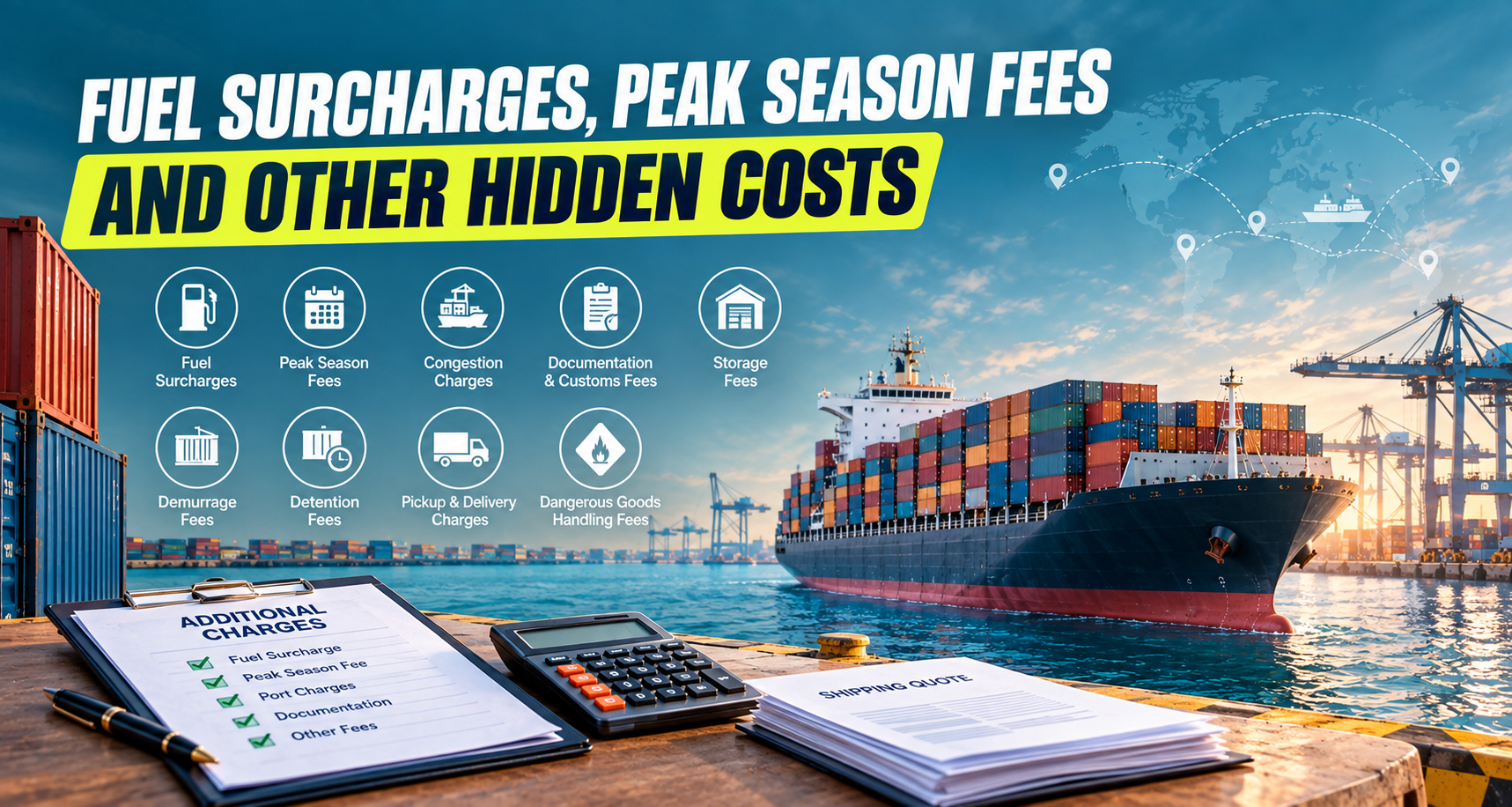
Fuel Surcharges, Peak Season Fees and Other Hidden Costs
In addition to the base sea freight rates, carriers impose several additional charges. These extras can catch some shippers off-guard when they see what freight charges actually are.
Watch for:
- Fuel surcharges, which vary based on oil prices
- Peak season surcharges during high demand months
- Congestion charges at busy ports
- Documentation and customs brokerage fees
- Storage fees for goods that are left at the port.
- Demurrage fee: charged when a loaded container remains at the terminal past the free time allowed.
- Detention fee: charged when a shipper keeps the carrier's container outside the terminal — for loading/unloading — past the free time allowed.
Both are regulated in the U.S. under the Federal Maritime Commission's Interpretive Rule on Demurrage and Detention." - Pickup and final delivery charges apply.
- Fees for dangerous goods handling
Think of these as an ocean freight charges list. Before accepting any quote, read it line by line to see if it fits your needs. A low headline rate doesn't mean a low final invoice. Ask directly what might be added later. Often first-time shippers get caught in demurrage and detention.
How to Compare Sea Freight Rates and Quotes Side by Side?
The first part of a fair comparison is to match the details, rather than just the prices. To compare numbers, ask for a full sea freight quote that lists every included and excluded item.
Look at each quote and make sure they all quote the same:
- Origin and destination
- Incoterms, or the agreed rules for who pays for what
- FCL or LCL and container size
- Cargo weight and volume
- Transit time and sailing schedule
- Included charges versus excluded charges
- Quote validity period
- Destination charges and inland transportation
- Customs-related services
Common Incoterms and Who Pays for Freight
| Incoterm | Who Arranges Main Freight | Risk Transfers to Buyer |
|---|---|---|
| EXW | Buyer | At seller's premises |
| FOB | Buyer | Once loaded on vessel |
| CIF | Seller | Once loaded on vessel (seller insures) |
| DDP | Seller | At buyer's final destination |
Incoterms® is a registered trademark of the International Chamber of Commerce (ICC), which publishes and maintains the official rules
International freight pricing means it is about looking beyond the base ocean freight price. Look at the total landed cost instead.
This includes all pickup to final delivery fees. Freightos says that ocean quotes may vary in terms of service. You can have one quote be door to door. Another may be just port-to-port. Handling and inland services can differ too.
Don’t just assume, ask this question: "What exactly is included in this quote?" If the forward answers clearly and completely, you can trust him.
How to Get the Best Sea Freight Rate for Your Shipment?
You can reduce your sea freight shipping costs with some minor changes to your planning and booking. Here are some practical measures:
- Pre-book a space rather than booking it at the last minute
- Look around multiple quotes before making your final decision with sea freight companies.
- Give accurate cargo weight and dimensions from the start
- Do not make false weight declarations, which may trigger penalties.
- Choose FCL or LCL based on your real shipment size
- Be flexible with sailing dates when your business allows it
- Compare local ports also, as one alternate port may save money.
- Consolidate smaller shipments where it is feasible
- Improve your packaging to use container space more efficiently
- Try to avoid holding time at the port if it is not necessary.
- Understand basic Incoterms to know who pays what.
- Request a complete cost breakdown before booking
- Check the validity period of the quote before you commit
- Ask directly about possible surcharges that could apply later
- Build a long-term relationship with one trusted forwarder, rather than changing them constantly.
- Never choose a provider based on the lowest base rate alone
These simple steps can help you save money on sea freight shipping bill in the long term. It is not necessary to compromise on service or reliability in order to save money.
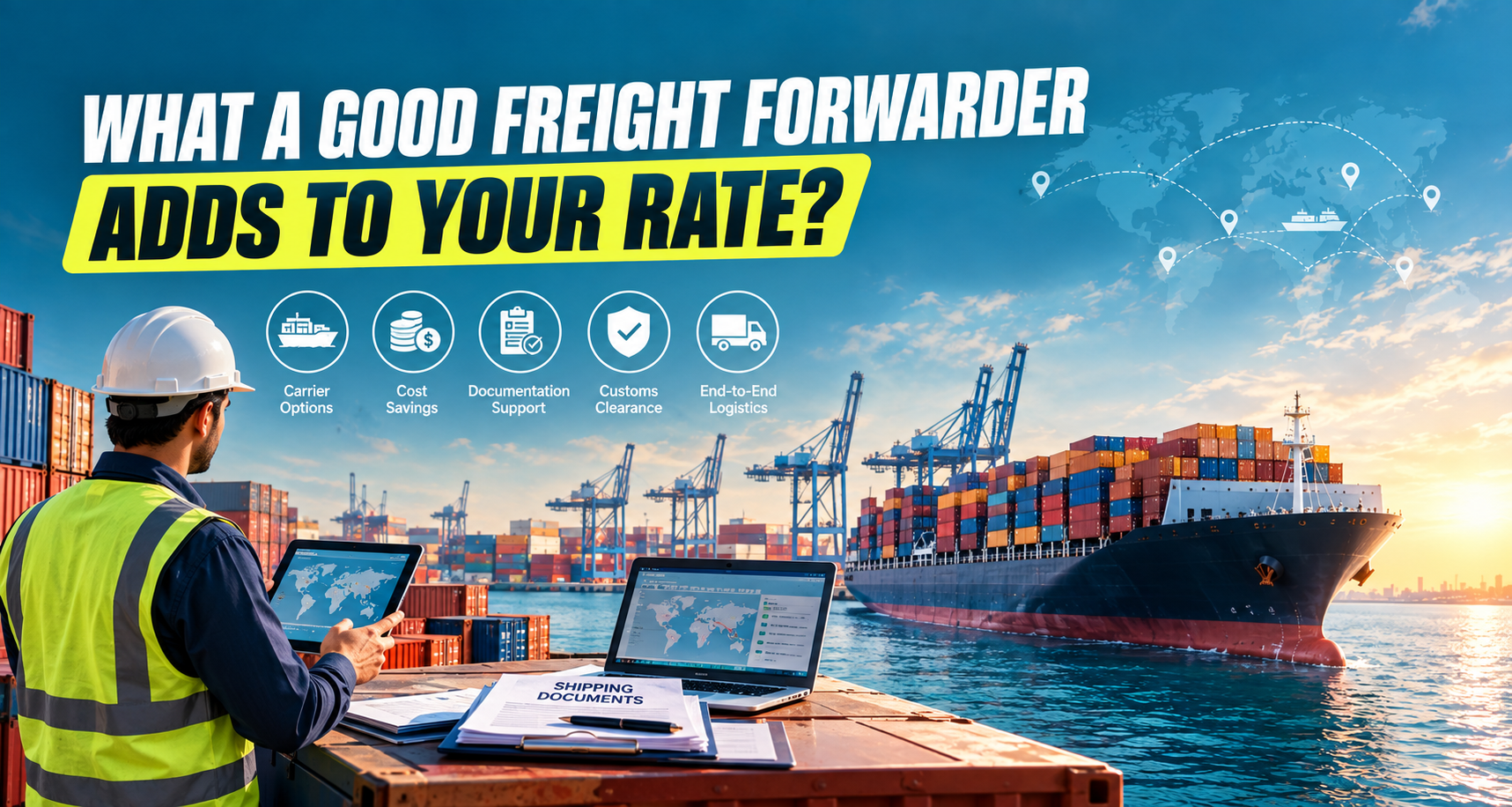
What a Good Freight Forwarder Adds to Your Rate?
Your freight forwarder will take care of the shipping process on your behalf. Good forwarders come with knowledge of carriers, routes and negotiating skills. Most individual shippers don't have the time to create these by themselves.
A good forwarder can assist in the following areas:
- Comparing rates across multiple carriers
- Consolidating cargo to reduce LCL costs
- Preparing accurate documentation
- Coordinating customs clearance
- Arranging inland transportation on both ends
- Planning shipments around peak season and port congestion
- Reviewing quotes so you understand every charge
Not all freight forwarders will always offer the cheapest rate on all lanes. No honest provider will guarantee that.
What can an experienced forwarding company provide is a more clear and better thought out shipping solution, even if the absolute lowest base rate is not included.
This is where the sea freight logistics expertise can be of real help. Knowing rate structures can sometimes mean real savings in the total cost to a forwarder.
A forwarder who is truly knowledgeable about sea freight shipping can also see the obvious opportunities for savings. This could involve making multiple bookings or planning around off-peak weeks on a ship.
This is where Sky2C comes in, assisting businesses in getting a clear and competitive quote. It helps you realize what is covered in it and also exactly how much you are actually paying for your shipping.
Conclusion
More than just the number on the front of a shipping quote, the overall sea freight charges are driven by a lot more. All of these contribute to the cargo details, container type, and origin/destination fees.
Seasonal demand also plays a role. Base rate costs can come with a hidden price tag from demurrage and detention fees.
The better approach is to compare complete quotes, not just a single headline figure.
Ask direct questions about what is included. Provide correct shipment information from the beginning. Particularly, if you are working with sea freight services from an experienced partner, you will also be able to avoid costly mistakes.
Looking for an exact quote for your next shipment without any hidden surprises? Contact Sky2C. Get a straightforward answer about what your sea freight shipping will really cost.
FAQs
Q1: How to calculate sea freight cost per unit?
Divide your total shipping cost by the number of units shipped. Sky2C breaks down every charge so you get an accurate, itemized cost per unit before you book.
Q2: Is sea freight cheaper than air freight?
Yes, sea freight is cheaper for large or heavy shipments than air freight. Sky2C helps you compare sea and air options to find the most cost-effective choice for your cargo.
Q3: What is included in sea freight charges?
Sea freight charges include the base ocean rate plus fees like terminal handling, documentation, and fuel surcharges. Sky2C gives you a full breakdown before you commit.
Q4: How much does it cost to ship a 20ft/40ft container?
Container costs vary by route, season and demand, so there's no fixed price. Sky2C provides a clear, accurate quote based on your specific shipment details.
Q5: Does booking early lower sea freight rates?
Yes, early booking can have better rates and space before peak season demand rises. Sky2C helps you plan and book at the right time.


