




Ocean freight is one of the most important shipping methods in global trade. For businesses moving goods internationally, it offers scale, flexibility, and cost efficiency that other transport modes often cannot match.
If you are asking what ocean freight is, the simple answer is this: it is the movement of cargo by sea using container ships and established port-to-port logistics networks.
That simple definition, however, only tells part of the story. Ocean freight Shipping involves documentation, port coordination, container selection, customs handling, inland transportation, and timing decisions that directly affect cost and performance.
Understanding how it works is essential if you want cleaner execution, better rates, and fewer avoidable disruptions in your supply chain.
What is Ocean Freight?
Ocean freight is the shipment of cargo by vessel across international sea routes. It is typically used for large, heavy, bulky, or non-urgent goods that do not need the speed of air transport.
For global trade, this mode is foundational because ships can carry far more cargo than aircraft, making sea transport the practical choice for large-volume international shipments.
From industrial cargo and retail inventory to machinery, consumer goods, and project freight, ocean transport supports a wide range of commercial movements.
In real-world terms, ocean freight forwarding is not just about booking space on a ship. It also includes pickup planning, export paperwork, port handling, customs support, and delivery coordination at destination.
How Ocean Freight Works - Booking to Delivery:
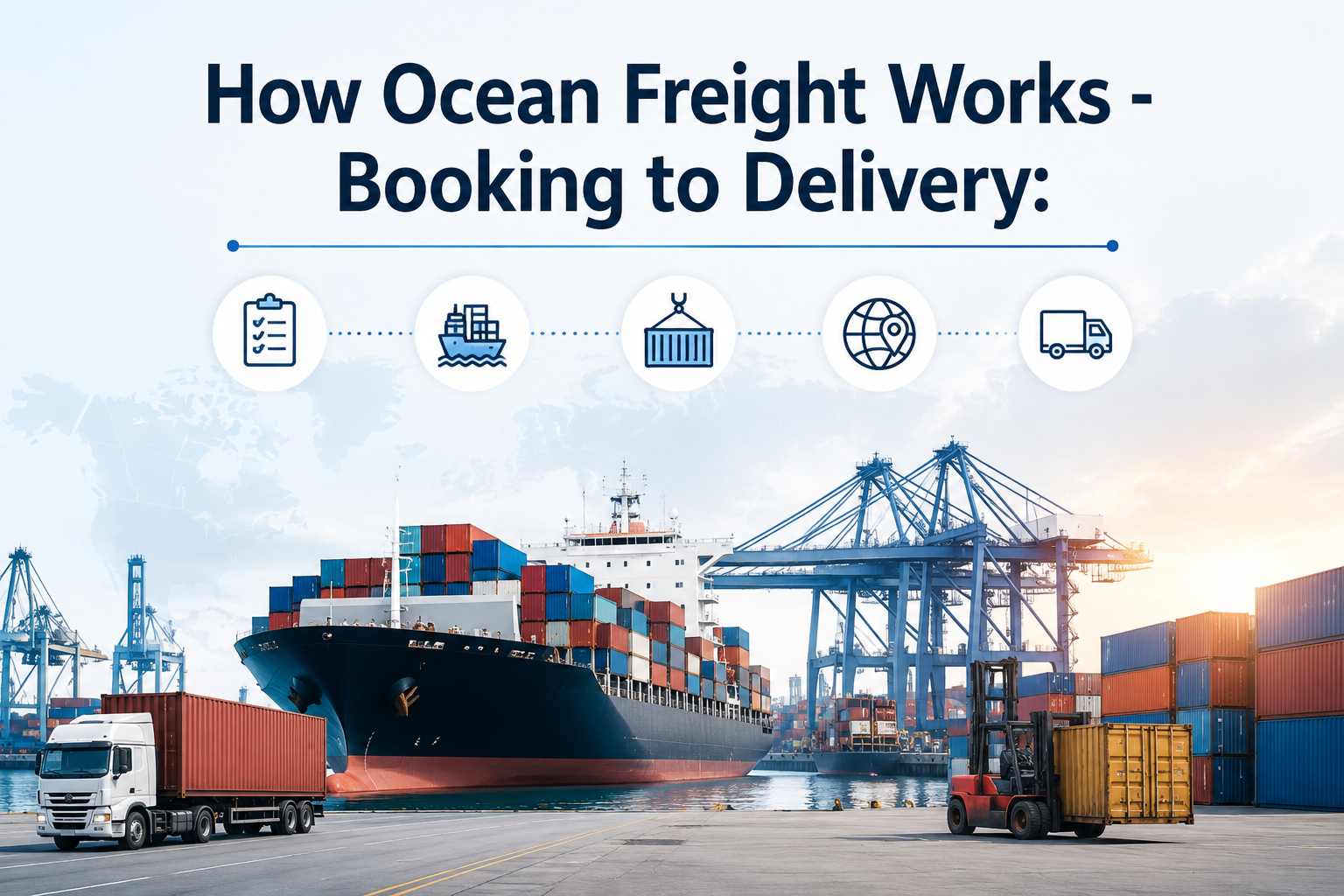
- The ocean freight process begins when the shipper confirms cargo details such as dimensions, weight, commodity type, origin, destination, and preferred timeline. Based on those details, the shipment is matched to the right service type, container option, and sailing route.
- The next step is booking cargo space with a carrier. Once the booking is confirmed, cargo is collected from the shipper or delivered to a consolidation point, depending on whether the shipment is moving as FCL or LCL.
- After cargo is prepared, export documentation is completed and the shipment is moved to the port of loading. At that stage, the container or cargo unit is processed through terminal handling and loaded onto the vessel.
- During transit, tracking systems and shipment milestones help the shipper monitor movement across ports and expected arrival windows. This is where digital visibility has become more important, especially as how ocean freight shipping software improves tracking accuracy is now a real differentiator in logistics planning.
- Once the vessel reaches the destination port, the cargo goes through discharge, customs procedures, terminal release, and onward inland transportation. The final delivery may go to a warehouse, distribution center, consignee address, or another logistics node depending on the shipment plan.
Choosing between FCL and LCL:
One of the biggest decisions in ocean freight shipping is whether the cargo should move as an FCL or LCL. That choice affects pricing, transit handling, flexibility, and even risk of exposure.
FCL: Full Container Load
- FCL means one shipper book with an entire container for exclusive use. The container may be fully packed or partially filled, but it remains dedicated to a single shipment.
- This option is usually better for larger volumes, cargo requiring tighter control, or shipments where reducing handling is important. Because the goods stay sealed from origin to destination, FCL can offer stronger efficiency and lower handling risk.
LCL: Less than Container Load
- LCL means multiple shippers share space in one container. The shipper pays for the portion of container space used, usually measured by volume.
- LCL works well for smaller shipments that do not justify the cost of a full container. However, because the cargo must be consolidated and later deconsolidated, it can involve more handling and slightly more complex transit coordination.
Which Option is Right for Ocean Freight?
If the cargo volume is substantial and timing consistency matters, FCL is often the stronger choice. If the shipment is smaller and budget efficiency is more important than exclusive container use, LCL can be the more practical route.
What Affects Ocean Freight Rates?
Many shippers ask about ocean freight rates, but pricing is never driven by just one variable. Rate structures can change based on shipment size, route, container type, demand cycles, carrier capacity, fuel-related charges, surcharges, and port conditions.
This is also where people often ask what ocean freight charges in practical terms is. The answer usually includes more than just the base freight cost. Ocean shipping costs may involve origin handling, documentation fees, terminal charges, customs-related expenses, destination handling, inland delivery, and mode-specific surcharges.
If you want to understand how to calculate ocean freight charges, start with these variables:
- Shipment volume or container type.
- Origin and destination ports.
- Commodity and cargo class.
- FCL or LCL structure.
- Fuel, peak season, or congestion surcharges.
- Customs, handling, and inland delivery needs.
For larger and heavier shipments, sea shipping often provides much stronger value than air. For smaller shipments, the gap can narrow depending on urgency and handling needs.
Why An Ocean Freight Forwarder
Matters?
A strong ocean freight forwarder does far more than book space with carriers. A forwarder acts as the operational coordinator for the shipment, aligning cargo readiness, carrier schedules, port procedures, documentation, customs support, and inland delivery planning.
This matters because ocean transport includes multiple moving parts, and each one can affect delays, costs, or compliance if not managed properly.
An experienced forwarder helps reduce that friction by bringing route knowledge, carrier access, documentation accuracy, and contingency handling into a single process.
In practical terms, ocean freight forwarding can help businesses:
- Access better routing options.
- Consolidate cargo efficiently.
- Manage paperwork and compliance.
- Improve schedule coordination.
- Reduce avoidable detention, delay, or rework.
That is why choosing the right forwarding partner is often as important as choosing the shipping mode itself.
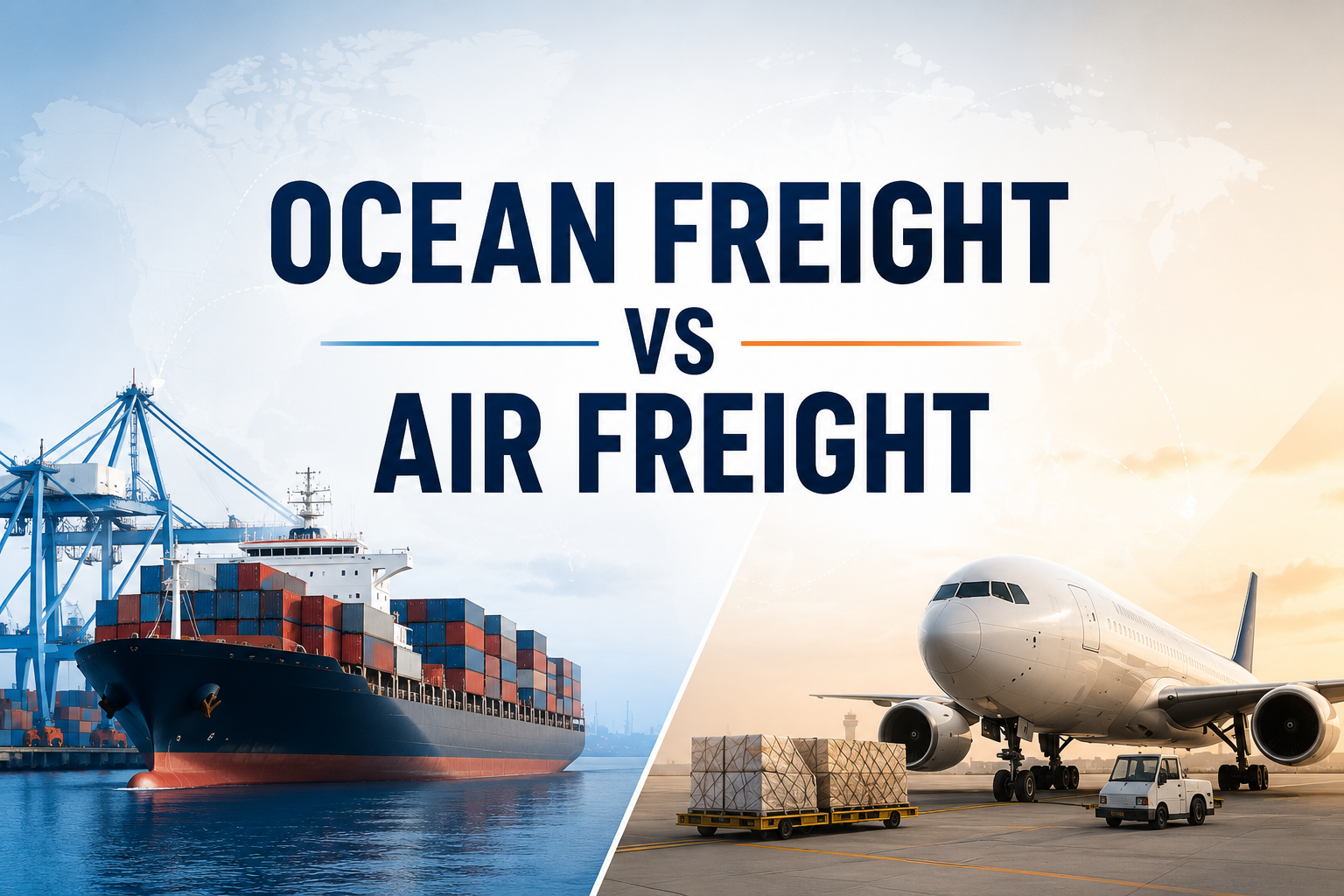
Ocean Freight vs Air Freight
One of the most common shipping questions today is what the best freight option, air shipping or ocean shipping is. The answer depends on urgency, cargo type, budget, and shipment size.
|
Ocean Shipping |
Air Shipping |
|
For heavy, large, or high-volume cargo |
When Speed is essential for the cargo |
|
When shipment is not time-critical |
When goods are urgent or time-sensitive |
|
Cost efficiency is a priority |
Shipment volume is smaller |
|
Container-based planning makes operational sense |
The value of the cargo justifies the higher transport cost |
In most standard trade scenarios, ocean transport wins on scale and price, while air wins on speed. That is why ocean freight remains the backbone of international cargo movement despite longer transit cycles.
Why Businesses Continue to Choose Ocean Freight?
There is a clear reason ocean freight continues to dominate global trade logistics. It offers unmatched carrying capacity, broad international reach, and better economics for many commercial shipments.
According to UNCTAD's Review of Maritime Transport, over 80% of global trade by volume moves by sea — underscoring just how central ocean freight is to international commerce
It also supports a wide range of shipment profiles, from full containers to shared loads, making it adaptable across industries and cargo sizes.
For companies planning inventory, replenishment cycles, and international distribution strategically, ocean transport often delivers the strongest long-term value.
Another major reason is environmental efficiency relative to air transport. While ocean shipping is slower, it generally has a lower carbon footprint per unit moved than air freight, especially on large-volume routes.
Final Word
If you are evaluating what is ocean freight, the most practical definition is this: it is the most scalable and cost-efficient way to move large volumes of international cargo by sea.
But successful execution depends on much more than vessel space alone. It requires the right container decision, accurate paperwork, clear cost understanding, and a capable logistics partner.
For shippers moving bulk, heavy, or non-urgent cargo, ocean freight shipping remains the strongest option in many trade lanes. And when supported by an experienced ocean freight forwarder, it becomes far easier to control cost, improve visibility, and move cargo with confidence across global markets.
Frequently Asked Questions
Q1 . What are ocean freight charges?
The ocean freight charges depend on the container, Standard rates, Shipment size may vary. For accurate cost of ocean freight get a free quote from our Experts..
Q2. What is LCL and FCL shipping?
In LCL your goods share a container with other shipments and in FCL you get a whole container to yourself, best for larger shipments.
Q3. How long does ocean freight shipping take?
Ocean freight shipping normally takes 4-8 weeks, depending on the origin, destination, and route.
Q4. Do I need cargo insurance for ocean freight?
It depends on the customer's requirement, but it's strongly recommended. At Sky2c we provide insurance on your goods.
Q5. Which is better, air freight or ocean freight?
If you have a heavy shipment, ocean freight is better then air freight as ocean freight cost is lower then air freight cost. Whereas for small shipments and on urgent basis you can go for air freight with high cost.


